Anion Gap Calculator for High Anion Gap Acidosis
What Is the Meaning of the Anion Gap
This anion gap is a derived value based on serum electrolytes that assists clinicians measure acid-base balance. It is based primarily on sodium, chloride, and bicarbonate levels from a common electrolyte panel. Because some charged particles are not directly detected in standard blood chemistry testing, the anion gap acts as a useful diagnostic tool for identifying hidden acid accumulation or other forms of metabolic derangement.
This anion gap calculator streamlines this calculation formula and helps turn raw laboratory values into a meaningful clinical clue. In clinical use, it supports lab interpretation by showing whether there is an excess of unmeasured acids or an unexpected change in measured ions. That makes it especially useful when a patient has symptoms or laboratory values suggesting an acid-base disorder.
The concept is rooted in the balance between positively charged and negatively charged particles in the blood. When the measured cations and anions do not match as expected, the difference suggests an anion deficit or an accumulation of unmeasured substances. This is why the anion gap is so important in detecting a hidden systemic acidosis.
Typical interpretation starts with the serum sodium and serum chloride values, then considers serum bicarbonate. Some calculators also include serum potassium, although many standard formulas omit it. The result is compared with a reference range to determine whether it is normal, elevated, or otherwise unexpected.
How to Calculate the Anion Gap
The standard anion gap formula is easy to use. A typical form is:
Anion gap = serum sodium - (serum chloride + serum bicarbonate)
Certain versions add potassium:
Anion gap = (sodium + potassium) - (chloride + bicarbonate)
In most modern practice, clinicians use the sodium-based formula because potassium is relatively small in comparison and may not add enough precision to change the clinical picture. However, an anion gap calculator may provide both approaches depending on the setting.
Conceptually, the calculation works like this. Sodium is the major measured cation. Chloride and bicarbonate are the major measured anions. Anything left over is the gap, representing unmeasured ions such as proteins, phosphates, organic acids, and other circulating charged substances. A result outside the expected range suggests an unexpected result that should be checked in the context of the patient’s symptoms and other laboratory values.
Albumin matters because it is a major unmeasured anion. When albumin is low, the measured anion gap may appear falsely normal or only mildly elevated. For that reason, many clinicians use an albumin-corrected anion gap to improve accuracy. This corrected value is especially important when evaluating a patient with suspected metabolic acidosis or another acid-base disorder.
A practical way to think about the calculator is that it functions as a quick screening step in blood chemistry analysis. It does not diagnose the underlying cause by itself, but it helps point toward the right next step in medical assessment. In other words, it is a supportive marker rather than a complete diagnosis.
For example, if sodium is 140, chloride is 100, and bicarbonate is 12, the anion gap is 28. This is above the usual reference range and suggests excess unmeasured acids. If albumin is low, the corrected value may be even more informative. This is exactly the type of calculation that an anion gap calculator can do instantly, reducing the chance of arithmetic mistakes during urgent clinical decision-making.
Why Elevated Anion Gap Metabolic Acidosis Matters
High anion gap acidosis is a important form of metabolic acidosis in which acids accumulate in the blood and lower the bicarbonate concentration. The gap widens because those acids are not fully captured in standard electrolyte measurements. Identifying this pattern is important because it often reflects a significant root cause that needs prompt attention.
From a physiology standpoint, the body tries to preserve acid-base homeostasis by buffering acids and adjusting respiratory and renal function. When that balance is disrupted, pH disturbances can develop rapidly. High anion gap states often indicate a marked metabolic derangement, and the result should be interpreted alongside the patient’s condition rather than in isolation.
One of the most useful clues in this setting is lactate. Elevated lactate can signal tissue hypoperfusion, sepsis, seizures, hypoxia, or other stress states. Because lactate is an unmeasured anion, it can raise the anion gap and point to a potentially dangerous cause of systemic acidosis.
Recognizing high anion gap metabolic acidosis also improves risk stratification. A markedly elevated gap may indicate a need for rapid reassessment, more testing, or immediate intervention. The calculator therefore supports not only diagnosis but also prioritization, especially when the patient is unstable or has concerning symptoms such as confusion, rapid breathing, vomiting, or decreased level of consciousness.
It is also helpful to remember that not every acidosis is the same. Some disorders produce a normal anion gap, while others produce a high anion gap. Distinguishing between these patterns is a core part of laboratory interpretation and can guide the workup toward a more precise diagnosis.
Common Sources of Increased Anion Gap Acidosis
Several disorders can result in high anion gap metabolic acidosis. The chief and important in practice are lactic acidosis, ketoacidosis, renal failure, and ingestion of toxic alcohols. Each acts through a distinct mechanism, but all create an surplus of unmeasured acids in the bloodstream.
Lactic acidosis happens when lactate production exceeds clearance. It can be associated with shock, poor perfusion, severe infection, seizures, or certain medications. Because lactate is a supportive marker of tissue stress, it is often checked when a high anion gap is detected.
Ketoacidosis is another major cause. In diabetic ketoacidosis, the body uses fat for fuel, producing ketones that acidify the blood. Ketoacidosis can also occur with prolonged fasting, heavy alcohol use, or other metabolic conditions. In these cases, the calculator may reveal a substantial gap even before the broader picture is fully recognized.
Renal failure can lead to acid retention and reduced clearance of organic acids, producing uremia and high anion gap acidosis. As kidney function declines, the body becomes less able to excrete acid and maintain normal chemistry. This is a classic cause of widening blood chemistry abnormalities.
Toxic alcohols are particularly important because they are time-sensitive and can be life-threatening. Ethylene glycol and methanol can cause profound acidosis, neurologic injury, and organ damage. A high anion gap in the right context should raise suspicion for these exposures, especially if the history is unclear or the symptoms are severe.
Salicylate poisoning can also produce complex acid-base findings, including an elevated anion gap. It may present with mixed disorders rather than a single pattern, so careful interpretation is essential. In all of these scenarios, the calculator is best used as part of a broader medical assessment rather than as a standalone answer.
How to Interpret the Result
Understanding the result begins with matching it to the expected reference range. A normal anion gap usually suggests that the cause of acidosis, if present, comes from bicarbonate loss or a different non-gap process. A high result indicates extra unmeasured acids and points toward disorders such as lactic acidosis, ketoacidosis, or renal failure.
An albumin-corrected anion gap is particularly important when albumin is reduced. Because albumin plays a major role in the unmeasured anion pool, low levels can mask an elevated gap. Correcting for albumin helps reveal the true corrected value and reduces the chance of missing clinically important acidosis.
The delta gap is another helpful interpretive tool. It compares the change in the anion gap with the change in bicarbonate, helping detect mixed acid-base states. For example, a patient may have high anion gap acidosis plus another concurrent disorder that alters bicarbonate in a different direction. The delta gap can reveal whether the pattern is isolated or combined.
Analysis should also account for the patient’s symptoms, medication history, kidney function, glucose level, ketones, lactate, and possible toxin exposure. A calculator result is a starting point for analysis, not the final answer. In clinical practice, the most useful approach is to combine the anion gap with the rest of the electrolyte panel and the overall picture of acid-base balance.
When the result is only slightly elevated, the meaning may depend on lab interpretation, the patient’s baseline values, and whether there is hypoalbuminemia. When the gap is clearly elevated, the likelihood of a significant acid load increases. That is where the calculator becomes an especially valuable diagnostic tool for narrowing the underlying cause.
Constraints of the Anion Gap Calculator
Though useful, the anion gap calculator is limited. One concern is lab variation. Various labs may use somewhat different measurement methods, and those differences can affect the final number. A value that is normal in one setting may be borderline in another because of how the serum electrolytes are reported.
Measurement error is another issue. Small inaccuracies in serum sodium, serum chloride, or serum bicarbonate can affect the calculated result. This matters most when the value is near the upper or lower end of the expected range. When that happens, repeat testing and clinical context are important.
Hypoalbuminemia can hide the true degree of acidosis. Since albumin is a major unmeasured anion, low albumin can make the anion gap appear less abnormal than it truly is. That is why an albumin-corrected anion gap often provides a more accurate view of the metabolic state.
Another limitation is that the calculator https://telegra.ph/How-to-Interpret-an-Anion-Gap-Calculator-When-Albumin-Is-Low-08-29 does not explain why the abnormality exists. It may identify the presence of an acid-base problem, but not the precise cause. A high value should always be followed by clinical correlation with symptoms, exam findings, and additional testing. Without that step, there is a risk of misreading a single number.
Finally, the anion gap can be influenced by the broader context of blood chemistry, including medications, fluid status, and chronic disease. The calculator is therefore most useful as part of a complete workup that includes medical assessment and thoughtful interpretation of the entire clinical picture.
When to Seek Immediate Medical Evaluation
Some of these anion gap results should raise urgent concern, particularly if they occur with symptoms of severe acidosis. Extreme shortness of breath, confusion, significant weakness, vomiting, chest discomfort, or reduced responsiveness can signal a dangerous metabolic problem. In those cases, the result may indicate a condition that requires urgent treatment.
Critical values are especially important when the gap is very high or the patient is clinically unstable. An elevated anion gap together with a severe electrolyte imbalance may reflect a toxin exposure, severe infection, uncontrolled diabetes, or kidney failure. These situations can deteriorate quickly.
If there is concern for toxic alcohols such as ethylene glycol or methanol, urgent evaluation is essential. Likewise, salicylate poisoning can cause major complications and mixed acid-base abnormalities. Delaying care in these settings can worsen outcomes.
Because an elevated gap is a sign of possible systemic acidosis, it should be treated as a important clue rather than a trivial lab abnormality. The safest approach is to seek prompt medical review whenever the result is unexpected, severe, or accompanied by worrisome symptoms. The calculator can help identify the problem, but it cannot replace urgent bedside evaluation when needed.
Common Questions
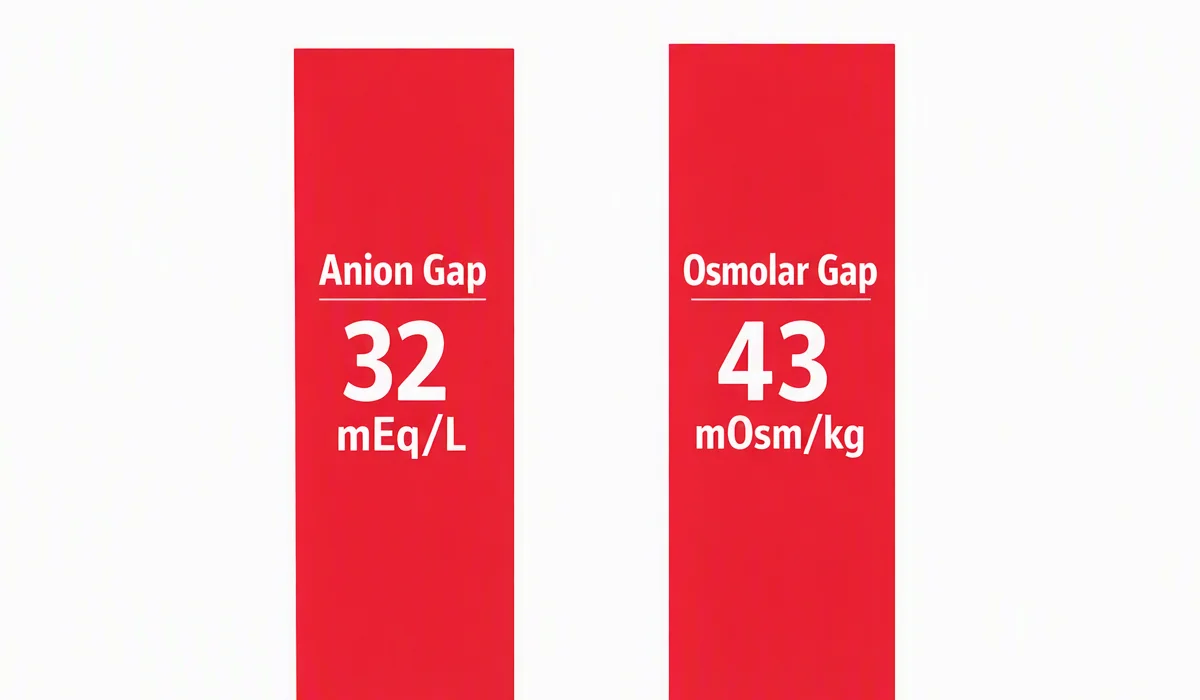
What is an anion gap calculator used for?
An anion gap calculator is used to efficiently check whether a patient has a typical or high anion gap based on standard blood chemistry. It helps with lab interpretation, aids in identifying high anion gap metabolic acidosis, and guides the search for an underlying cause such as lactic acidosis, ketoacidosis, renal failure, or toxic alcohol exposure.
What is the formula for calculating the anion gap from lab values?
The standard anion gap formula is sodium minus the sum of chloride and bicarbonate. Some versions also include potassium. A calculator uses serum sodium, serum chloride, serum bicarbonate, and sometimes serum potassium to produce the result quickly and accurately.
What are common causes of high anion gap metabolic acidosis?
Common causes include lactic acidosis, ketoacidosis, especially diabetic ketoacidosis, renal failure with uremia, and exposure to toxic alcohols such as ethylene glycol and methanol. Salicylate poisoning can also cause a high anion gap and may produce mixed acid-base abnormalities.
What is the importance of albumin correction in anion gap interpretation?
Albumin is a major unmeasured anion, so low albumin can make the gap look falsely normal. An albumin-corrected anion gap helps reveal the true abnormality and improves the accuracy of the corrected value. This is especially useful when evaluating suspected metabolic acidosis or other acid-base disorders.
When is a high anion gap an emergency?
A high result should be treated urgently when it is paired with critical values, severe acidosis, mental status changes, breathing difficulty, or a major electrolyte imbalance. Suspected poisoning, severe infection, diabetic ketoacidosis, or rapidly worsening kidney failure also warrant immediate emergency evaluation. The overall clinical picture is essential for deciding how urgent the situation is.